admin
Israel’s 60th Yom Ha’atzmaut, Independence Day, fell on Thursday, and the momentous anniversary is being marked — and marketed — in America with a slew of cultural events designed to… Read more »

Israel’s 60th Yom Ha’atzmaut, Independence Day, fell on Thursday, and the momentous anniversary is being marked — and marketed — in America with a slew of cultural events designed to… Read more »
But you can’t, if you’re running for president of the United States, always pick the lunatics who endorse you. Each of the candidates has learned this lesson by now, although… Read more »
Wedding season is upon us and for engaged couples hemming and hawing over flower and band decisions, here’s a (possibly) more productive use of your time — the S.H.A.L.O.M. workshop.Approved… Read more »
When the siren went off all over Israel at 10am this morning for Yom HaShoah, I watched as the country came to a momentary standstill. From my third-floor office overlooking… Read more »
Any Jewish grandmother worth her salt will tell you that all you need to do to conceive a healthy baby boy is stand on your head at dawn every day… Read more »
(I apologize to those of you who may be irritated by my constant references to New York. I am sad to report that, while the following is indeed local news,… Read more »
Amy Ephron at The Huffington Post has a theory: “In order to be First Lady you have to have a cookie recipe.” Ephron’s tone is (of course) tongue-in-cheek as she… Read more »
Well, the seders have come and gone, and I for one had a wonderful holiday. Passover’s my favorite holiday, I think, but that also raises the stakes a great deal.… Read more »
Is my arriving late to a launch party for a book about work-life balance because I had to work late a valid example of situational irony? Or is it just… Read more »
My children are not perfect. I can say this because I have been a mother for almost seven years, and so have had ample time in which get used to… Read more »


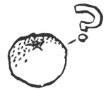
wishing you a chag sameach + an orange on your Seder plate 🍊
"I continued to dread Passover for many years because it rekindled not only painful childhood memories but also my shame over how Jewish I wasn’t."
In a classic Lilith Passover story, Andrea Kott looks back on her childhood seders in the beauty parlor owned by her Hungarian great aunt and uncle.
Read it at Lilith.org.
Art by @holliechastain featured in Lilith`s Fall 2017 issue
"I continued to dread Passover for many years because it rekindled not only painful childhood memories but also my shame over how Jewish I wasn’t."
In a classic Lilith Passover story, Andrea Kott looks back on her childhood seders in the beauty parlor owned by her Hungarian great aunt and uncle.
Read it at Lilith.org.
Art by @holliechastain featured in Lilith`s Fall 2017 issue
"Deftly she scraped the silver scales and forced
one fish into the other; the soft feet
of the calf she boiled into jelly; she stuffed rice
into the plump hen and bound
its wings and legs; she poured hot fat
over the leg of the lamb. Spices
sizzled and baked as she stirred
the bones bubbling in the pot.
They sat round the silver, the red wine glasses,
and read the story of their deliverance."
"Passover" by Thilde Fox ❤️
"Deftly she scraped the silver scales and forced
one fish into the other; the soft feet
of the calf she boiled into jelly; she stuffed rice
into the plump hen and bound
its wings and legs; she poured hot fat
over the leg of the lamb. Spices
sizzled and baked as she stirred
the bones bubbling in the pot.
They sat round the silver, the red wine glasses,
and read the story of their deliverance."
"Passover" by Thilde Fox ❤️
"The next Passover, a former student of my mother’s—Mom had gone on to teach high school Spanish—now a reporter for the local newspaper, contacted her about a story she was writing on Passover cuisine. She remembered my mother as vaguely exotic—a Cuban Jew with roots in Turkey and Greece. Along with drilling her students in stem changing verbs, my mother also unfurled her personal history in the classroom. Here was a chance for my mother to expand her audience beyond the teenagers she taught."
Read "The Empty Seder Table" by Judy Bolton-Fasman from our spring 2016 issue. Linked in our bio 💥
"The next Passover, a former student of my mother’s—Mom had gone on to teach high school Spanish—now a reporter for the local newspaper, contacted her about a story she was writing on Passover cuisine. She remembered my mother as vaguely exotic—a Cuban Jew with roots in Turkey and Greece. Along with drilling her students in stem changing verbs, my mother also unfurled her personal history in the classroom. Here was a chance for my mother to expand her audience beyond the teenagers she taught."
Read "The Empty Seder Table" by Judy Bolton-Fasman from our spring 2016 issue. Linked in our bio 💥