Live from the Lilith Blog

March 13, 2013 by Heidi Gralla

“Be Prepared” To Protest The Boy Scouts’ Anti-Gay Power Play

I guess I can’t really take any personal credit for this, but I’m gratified that a chorus of protest, including mine, has prompted the Boy Scouts of America to re-evaluate its policy banning participation by gays and lesbians. (The Girl Scouts have always had a policy of non-discrimination.)

After re-affirming the exclusionary policy as recently as last summer, the BSA announced in January that it may change the rule so that each local unit could decide whether to admit homosexual leaders and scouts. This proposal triggered so much heated debate — within and outside of scouting – that the organization tabled the matter until its next meeting, in May.

It will be interesting to see whether the families who left scouting in response to the BSA’s anti-gay policy would find this new approach to be acceptable. I don’t. When my husband and I enrolled our seven-year-old in Cub Scouts last year, we knew the BSA had a reputation for being homophobic, but we hadn’t realized it was actually written into the organization’s by-laws. We discovered it when the anti-gay policy was re-affirmed last summer, and we left scouting at that time. (Lilith, Winter 2012-2013)

I saw it as a social justice issue that was closely tied to my identity as a Jew. I was especially disappointed that with more than 160 Boy Scout and Cub Scout groups affiliated with Jewish organizations, there wasn’t a bigger protest from Jewish scouting leaders. I think that’s finally starting to change. According to an article in The Jewish Week, officials of the National Jewish Committee on Scouting, which serves as an advisory committee to the Boy Scouts of America, took a vote of their regional chairs and found overwhelming support for an end to the ban on homosexuals in scouting. Members of the committee will push the BSA to change its policy, the article said.

  • 2 Comments
  •  

Live from the Lilith Blog

March 5, 2013 by

Do Not Abandon Me: Judaism and Alzheimer’s Disease

During the years my father struggled with dementia—from the early signs that began when he walked around touching sculptures in a sculpture garden, despite the clearly marked signs advising visitors not to touch; to the later years when he remembered I have a daughter but not her name; to the end stage with his gait reduced to short, slow steps, his gaze at times turned neither inward nor outward— I wish I had available to me the new book from URJ Press, Broken Fragments: Jewish Experiences of Alzheimer’s Disease through Diagnosis, Adaptation, and Moving On.

Broken Fragments, edited by Douglas J. Kohn, rabbi of Congregation Emanu El in Redlands, California, is filled with insights from rabbis, cantors, doctors, social workers, and family members of people with Alzheimer’s disease. These multiple viewpoints extend across the different stages of Alzheimer’s and dementia and reflect the array of issues caregivers and family members face. Reading this collection of essays is the literary equivalent of someone intimately whispering into your ear, “You are not alone.”

Hope and pain intertwine in these pages that do not sugarcoat the struggle of family members to treat a loved one with dignity in the face of their own frustration and loss of the person they knew. This struggle is especially poignant in the essays “Shining Through: Being a Daughter When Mom Is Changing,” “Care at Home or Care in a Home?” and “He’s Still My Father.” To read an adapted chapter from the book, see the excerpt by Rabbi Cary Kozberg in the current issue of Reform Judaism Magazine.

  • 1 Comment
  •  

Live from the Lilith Blog

March 4, 2013 by

Are Adoptive Families Culturally Persecuted?

Dr. Debora Spar

On Friday I attended a daylong symposium about adoption. The keynote speaker was Dr. Debora Spar, President of Barnard College. The topic of her address was “Adoption and its Critics.”

Her speech floored me. I had not realized that adoptive families felt culturally persecuted.

She presented two main theories for why people oppose, or are uncomfortable with, adoption. The first was the cultural meme that adoptive parents are bad people, which she traced back to the stigma against barren women, historical myths of stolen children and changelings, the fact that adoption often involves more overt exchanges of money than does family formation by birth, and evolutionary anthropological ideas that people shouldn’t be inclined to invest heavily except in their own flesh and blood. She also pointed out that you can barely find a story of an adoptive family where the adoptive parents are not awful, using orphaned Harry Potter as a prime example.

The second was the cultural meme that adopted children are bad people, which she traced back to cultural misgivings about genetic unknowns, the human tendency to assume that their own genes wouldn’t be a problem but that foreign genes might be, and to the media’s handling of adoption, especially the disproportional amplification of ‘bad stories,’ and still probably poorly understood concerns about attachment disorder and identity development.

  • 3 Comments
  •  

Live from the Lilith Blog

March 1, 2013 by

A Conversation With Maryann MacDonald

My name is Odette.
I live in Paris,
on a cobblestone square
With a splashing fountain and a silent statue.
My hair is curly.
Mama ties ribbons in it.
Papa reads to me and buys me toys.
I have everything I could wish for,
except a cat.

Photo credit: Stefan Falke

So begins Odette’s Secret (Bloomsbury 2013), a lyrical and haunting tale that was drawn from an actual story and reimagined by children’s book writer Maryann MacDonald. Lilith fiction editor Yona Zeldis McDonough talked to MacDonald about inspiration, Francophilia and the salvation offered by poetry.

Tell me, what inspired you to write this book?

One late August afternoon a few years ago, I was walking around the old Jewish neighborhood of the Marais in Paris with my husband. We passed an elementary school with a bronze plaque. The plaque honored the memory of the Jewish children, students at the school, who had been deported from France during WWII. I kept thinking about those children…who were they? What were their lives like in France during the war?

I began reading about life in Paris during World War II, especially about the life of French Jews. I learned that 11,400 children were deported. Most of these died. But more children survived in France than in any other European country. They were hidden in homes, convents, monasteries, farms and schools all over the country. To stay successfully hidden, these children had to “reinvent” themselves, to become Christian children. How had they been able to do this? And what was it like for them to readjust to reality after the war?

While I was at the American Library in Paris…by chance, I found Doors to Madame Marie, the autobiography of Odette Meyers, a woman who had been one of those hidden French children during the war.

I became fascinated by Odette’s story, and one night I shared it with my husband. Together we went to the 11th Arrondissement, to stand in front of the building where Odette had lived. “I so wish we could go inside!” I said, looking at the heavy oak door at the front of the building, a solid street door of the type that is always locked.

  • 2 Comments
  •  

Live from the Lilith Blog

February 27, 2013 by

Can You Make a Marriage More Equal?

www.kengoldmanart.com

Did you see MAKERS on PBS, with those many Jewish women trailblazers–like Sheryl Sandberg, Tiffany Shlain, Marissa Mayer (and many Lilith authors)?

Alix Kates Shulman talked about her classic “Marriage Agreement.” It still jolts people after all these years!

Shulman’s iconic, and iconoclastic, argument — that a woman and man should share equally the responsibility for their household and children — was derided when it first appeared in 1970. Norman Mailer, Russell Baker and Joan Didion were shocked, affronted. The real shock is just how resonant Shulman’s take on family politics still is today.

Check out the Marriage Agreement, which we reprised in Lilith’s Summer 2012 issue, along with a new ritual for egalitarian marriage in the 21st century.

Judge for yourself how much progress women have made.

  • 1 Comment
  •  

Live from the Lilith Blog

February 26, 2013 by

Seth MacFarlane Said WHAT?!

Chris Brown & Rihanna’s domestic violence date night 

Seth MacFarlane opened the night as most hosts do, calling out nominees and talking about this years films. On Django Unchained he said, “This is a story about man fighting to get back his woman who as been subjected to unthinkable violence, or as Chris Brown and Rihanna call it – a date movie.” Apparently you CAN make a Tarantino movie more offensive.

We saw your boobs

An entire song, dance and chorus dedicated to seeing actress’ boobs. Because that is what is significant about their work.

Quevenzhane Wallis is almost too old for George Clooney

This ‘joke’ was directed more at George Clooney dating young women than at the always-sassy and talented NINE YEAR OLD Quevenzhane Wallis, but it is still a joke that sexualizes a 9 year old.

All black people look the same

MacFarlane explained Flight using puppets (just go with it) and when William Shatner as Captain Kirk (again, just go with it) told him “In this day and age, you can’t do black-hand any more!” Macfarlane’s response was: What? I love Denzel Washington! He has a great sense of humor, I mean, he did all those Nutty Professor movies…

Related racism: Macfarlane asked Daniel Day Lewis “If you bumped into Don Cheadle on the studio lot, did you try and free him?

The Kardashians have facial hair

Untrue and irrelevant. Moving on…

Women never let anything go

Zero Dark Thirty is a movie about a woman’s 12 year vendetta to find Osama Bin Laden which showcases “a woman’s innate ability to never ever let anything go.”

  • 2 Comments
  •  

Live from the Lilith Blog

February 26, 2013 by

Non-Motherhood-by-Choice

For decades, the Jewish community has bemoaned the declining birthrate among Jews (except among the ultra-Orthodox). Now, secular America has caught up with Jewish worries, with reports examining what it means for the economic and social fabric when an entire population falls below replacement level.

But for many women, a decision not to have children plays out in more personal ways, as the numerous responses to a recent article in Newsweek’s The Daily Beast attest. 

In a preview of an article to appear in a forthcoming issue of Lilith, read one woman’s journey through her choice not to become a mother.

As a Jewish woman who has chosen not to have children, how do I make sense of my life in the context of Judaism’s first commandment—God enjoining Eve and Adam, in Genesis 1:28, to “be fruitful and multiply, and fill Earth”?

I was raised in a religious home in the 1940s and ’50s, but I don’t remember either of my parents pressuring me to be a mother when I grew up. Still, isn’t that what Jewish females do? We grow up, get married, and then multiply.

By early adulthood, I had left religious practice behind, believing, as a feminist, that a secular life would give me access to a lot more freedom. One day in the mid-1970s, I bought myself the iconic t-shirt of the era, the Roy Lichtenstein cartoon of a distraught woman with hot-red lips and the text bubble, “I can’t believe it. I forgot to have children.” I wore the tee as a joke until I realized it wasn’t. I needed a plan.

Would I be fruitful and multiply, or not?

I started an inventory of my girlfriends in the women’s liberation movement. Some had chosen single motherhood, some were helping their married friends raise their children, some, mostly lesbians, were choosing motherhood via artificial insemination. Some were going the conventional route, as had most of our parents. There were definitely options. I didn’t want to “forget” to have children, though. I wanted to make an informed, solid decision.

  • No Comments
  •  

Live from the Lilith Blog

February 20, 2013 by

Rabbis in Red Lipstick

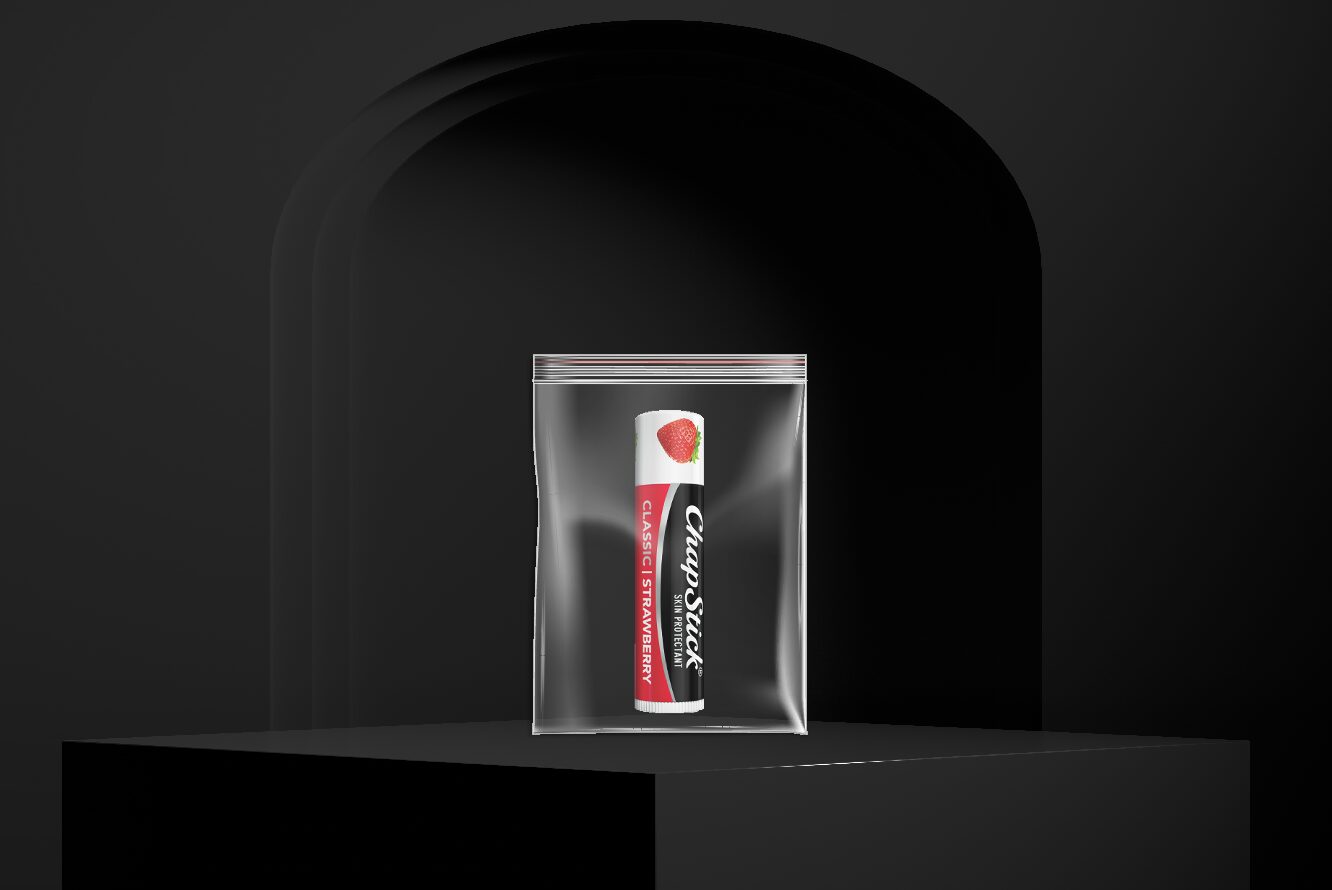
There are many things that play an important part in my morning ritual — a nice hot drink, a shower, morning prayers. One of the most important elements of my morning routine, however, is putting on my red lipstick. There is something so satisfying about applying the final smear of the creamy red across my lips before I walk out of the door–I feel instantly like a brighter, better version of myself.

My red lips have been my trademark for the last several years, and though the shade has varied, it’s always been red, red, and red. I’ve ventured from candy pink to seductive purples, and my personal favorite and general default, a true candy-apple red. In college, I spent hours defending my cosmetic habits to my feminist friends, who accused me of buying into patriarchal conceptions of beauty. I knew, however, that they didn’t quite understand why the contents of that tiny red tube were so vital. It was about making an active choice about my own gender expression in a way that made me feel all at once powerful, beautiful and uniquely feminine.

These days, as a person embarking on a lifelong journey of Jewish professional leadership — beginning my studies towards non-profit management at New York University’s Wagner School for public service — I continue try my hardest to bring my authentic self to the table as often as I can. Be it at a fundraising dinner, a board meeting, or in the office, I attempt to be fully present, bringing the traits I know to be my strengths — my energy, my genuine desire to connect with others and my drive to create inclusive community spaces — to my work. Oddly enough, the lipstick has become an essential part of making this happen. It is a final, dramatic touch — a flash of vibrant color — that urges me to truly turn up in the fullest way possible, wherever I am.

  • 18 Comments
  •  

Overheard in New York

February 18, 2013 by

Overheard in New York


Liana Finck received a Fulbright Fellowship and a Six Points Fellowship for Emerging Jewish Artists. She is finishing a graphic novel, forthcoming from Ecco Press, based on the Bintel Brief, a beloved Yiddish advice column that was published in the Forward newspaper beginning in 1906.

  • No Comments
  •  

Feminists In Focus

February 14, 2013 by

Where the Women Are (At the 22nd Annual NY Jewish Film Festival)

Life? Or Theatre?

Dutch director – male – obsessed with tragic German artist – female. German auteur filmmaker – female – honing in on interplay of intellect and sexuality driving renowned German-American political theorist – also female. Polish filmmakers – male – documenting a Polish town’s response to death camp transports but failing to get the only known survivor dropped from a train, a woman, to talk.

What do this year’s NY Jewish Film Festival offerings say about the roles of Jewish women when women and men make film? From a wide-ranging two weeks of domestic and international films, here come snapshots of three Shoah-related films: one documentary, one feature, one documentary short.

Long-time Dutch filmmaker Frans Weisz is a man obsessed with artist Charlotte Salomon, the subject of his 1981 feature film “Charlotte” and his freewheeling documentary, 30 years later, “Life? Or Theatre?”

Poor Charlotte. The shy, almost invisible, middle-class German Jew. She had one passionate relationship in Nazi Berlin before fleeing to the relative safety of a wealthy American woman’s chateau in the south of France. As Hitler destroyed European Jewry, Charlotte worked out her own life story in Leben? oder Theater? Diving into this massive work was her response to learning of her family’s hidden history of suicide, including her own mother. (Now in Amsterdam’s Jewish Historical Museum, the nearly 800 gouaches are like the storyboard for a musical, a three-part life story with acts and scenes, with tracing-paper overlays of comments and musical notations. The artist pared them down from an outpouring of some 1,300 pieces.)

  • 1 Comment
  •